Tuesday, 16 June 2015

AXIOM new ecosystem more info

AXIOM Ecosystem launched


AXIOM Ecosystem launched

The AXIOM ecosystem offers a communication-platform for already planned developments and services around the AXIOM cameras. The underlying idea is to offer a platform for the community to promote DIY-experiments, with the possibility to develop and offer their professional services in the future. This can be rentals or repairs, but also more advanced services such as rugged housings, individual modifications or even something completely different to what we can think of now. The initial launch of the AXIOM ecosystem will be used to collect feedback from you (the community) to assist with further developing and improving the system in the future. The launch of the AXIOM ecosystem marks an important step for us that will ensure the growth of services and products around the project. The ecosystem acts as the “backbone” for innovative products and services, and is open to the general public. This means you can offer your services and expertise here with the whole community and a large audience interested in Open Source cinema.


With the launch of the AXIOM ecosystem we are presenting a database of local, as well as European and worldwide offered services, matching supply and demand by location. The first step of the ecosystem represents an overview of expertises provided by the community, that are currently mostly educational and development based - but has the potential to drastically expand in the future as soon as the AXIOM Beta, and subsequently the AXIOM Gamma, cameras are in circulation.


You can find the current map here, if you want to add yourself to the database, you can do so by adding the information to the "ecosystem"-tab from your personal profile (or sign up if you do not have an account yet). A step-by-step guide of how to use the ecosystem can be found in the apertus Wiki.

The current categories in the ecosystem are:
  • Operator - you own an AXIOM and/or are familiar with operating it.
  • Rental - you plan to offer your AXIOM camera(s) for rent.
  • Repairs - you offer fixing or upgrading AXIOM cameras locally.
  • Hardware Customizations - you are planning on creating new modules or adapting existing ones; either as service or as an individual product.
  • Software - You plan to or already are creating software for and around the AXIOM platform.
  • Addons & Accessories - anything that can be used with the AXIOM platform, sales or services.
  • Training and Support - sharing AXIOM related knowledge in trainings, workshops or as consulting services.
  • Personal lending / rental - you are offering to share your camera with someone who is interested in it - not meant for commercial rental (which has its own category)
  • apertus° ambassador - you are interested in introduce the project and philosophy to your local community (or already are actively doing this)
  • other - anything not covered by the other categories
Project: 

AXIOM Ecosystem new launch


AXIOM ECOSYSTEM


Apertusº just launched the first edition of the AXIOM Ecosystem, a web platform meant to open up new opportunities in the future and act as a first-contact and communication hub for local communities. At the current stage it is meant as invitation to participate, to fill it with life, provide feedback and help us make this platform even better together.
Read more about the ecosystem here:

Monday, 8 June 2015

Open Cine Software - Development June 2015

Open Cine - Cinema DNG Clip Manager


Reviewing and Sorting Footage
- Import DNG sequence that was shot with a raw camera (Apertus or other) into Open Cine
- View footage in real-time
- Mark unneeded clips, rate good clips, write comments for each clip later a filter can be used to hide  all the bad/unneeded clips. Director could now review only the good ones and continue working with them.


During the continuing development of the Open Cine software for the mounting and management of CDNG media (and other flavours) there are naturally points of the build that require dressing at many points in the life cycle of the software.

Everything is available online through GitHub and Fabricator for the source code, and QT5 is used for the UI build.

Here we have some examples of where the software development is at this stage in June 2015, later we can elaborate on getting closer to the final release version.

The examples below are frame grabs from the software and are very early examples of the build to this date, and not close to any beta release.


Open Cine - You Tube early run through


Open Cine - Clip Manager early version


Axiom Developer Edition - Beta 1

Early AXIOM Beta I - Developer Edition


First Generation: For Developers

This first generation Early AXIOM Beta I - Developer Editioncontains the entire PCB stack envisioned for the complete Beta camera, but there are some things that are intermediate solutions or are not fully populated/integrated yet. Therefore we clearly state that this first version the Beta is intended for software and hardware developers primarily. People who want to use the Beta for film-making with a good technical background might already be happy with this hardware, but this version is not for people who expect a finished product yet. We want to give you a full and honest overview of what works and what does not work or has limitations currently:


- Early Beta comes with no enclosure
- The image sensor and sensor board design is final
- Early Beta comes with OS (Arch Linux) but only test firmware for FPGA - software updates will be                                  delivered frequently online
- Lens mount: passive e-mount with Canon EF or Nikon F mount adapter (both passive)
- Tripod mount (1/4"-20 thread) available on the Canon EF/Nikon F lens adapter only
- Interface Board is an interim solution with limited capabilities. (only half of the sensor connections are available, thus only half of the maximum bandwidth can be achieved, as a result the optional 180° rotation of the sensor board is not available yet)
- Power supply with 5V DC only - either dual 5V DC (2500mA) or one larger 5V adapter (5000mA)
- Current Power Board is an interim solution (dynamic changing of internal supply voltages not yet supported: using a different image sensor module in the future will require manual reconfiguration of power board)
- Single HDMI 1080p60 module available
- We might already have a triple HDMI 1080p60 module available at time of ordering (if not you can get one at cost later on as well if you are a crowdfunding voucher holder)
- No HDMI 4K module available yet
- Triple PMOD debug module available
- LED matrix debug module available
- Cmosis CMV12000 sensor only currently (different image sensor modules will be available later on)
- Camera controllable only via Ethernet (SSH) or Serial Console (USB)
- Camera webinterface GUI not working yet (will be fixed with software update)
- Screw-on IR/UV cut off filter required (we will offer these for purchase)
- Beta has no Optical Low Pass Filter (OLPF) - some people consider that a good thing :)
- Swapping out image sensor module for a different type is not plug and play yet (requires manual reconfiguration of power board)
- Early Betas come without color calibration yet (we want to develop this process together with the community)
- Current Beta Mainboard is an interim solution (no configurable data routing to/from shields yet) - new board revision that takes care of this already finished and will be tested soon, if it works we will use the new design in your Beta
- No addon shields available yet (Genlock, Timecode IN/OUT, Trigger, debug, breakout, etc. shields will be available later on)

Axiom PCB Stack June 2015

Early AXIOM Beta Update (*Accepting Orders Soon!)


New PCB stack - photo below


First Generation: For Developers

This first generation Early AXIOM Beta I - Developer Editioncontains the entire PCB stack envisioned for the complete Beta camera, but there are some things that are intermediate solutions or are not fully populated/integrated yet. Therefore we clearly state that this first version the Beta is intended for software and hardware developers primarily. People who want to use the Beta for film-making with a good technical background might already be happy with this hardware, but this version is not for people who expect a finished product yet. We want to give you a full and honest overview of what works and what does not work or has limitations currently:

Open Cine Software - Phabricator 2015


OPEN CINE - 2015


Open Cine has Phabricator development 
Phabricator is a suite of web-based software development collaboration tools, including the Differential code review tool, the Diffusion repository browser, the Herald change monitoring tool,[5] the Maniphest bug tracker and the Phriction wiki.[6] Phabricator integrates with GitMercurial, and Subversion. It is available as free software under the Apache License, version 2.
Phabricator was originally developed as an internal tool at Facebook.[7][8][9] Phabricator's principal developer is Evan Priestley.[1] Priestley left Facebook to continue Phabricator's development in a new company called Phacility.[2]

Apertusº Lab :


Open Cine Workboard :
https://lab.apertus.org/tag/open_cine/


Open Cine Software - GitHub 2015

OPEN CINE - JUNE 2015


OpenCine has a GitHub repository :
GitHub is a web-based Git repository hosting service, which offers all of the distributed revision control and source code management (SCM) functionality of Git as well as adding its own features. Unlike Git, which is strictly a command-line tool, GitHub provides a web-based graphical interface and desktop as well as mobile integration. It also provides access control and several collaboration features such as wikistask management, and bug tracking and feature requests for every project.[3]
GitHub offers both plans for private repositories and free accounts, which are usually used to host open-source software projects. As of 2015, GitHub reports having over 9 million users and over 21.1 million repositories,[4] making it the largest code hoster in the world.[5]


Open Cine June 2015


OPEN CINE 

RAW Video and Digital Negative processing and viewing suite


There are several free and open raw-image processing tools for still images like: ufrawdarktableRawTherapeeRawstudiodigiKam and many more. While some of them offer batch processing capabilities none of these tools are necessarily designed for moving pictures. Processing DNG sequences is cumbersome and time consuming, CinemaDNG MXF files are not yet supported at all.
This is where Open Cine should come in. It will be a raw processing tool designed from the ground up for moving images instead of still images.

Below is a very early reference of the kind of software being developed.


Due to this being an Open Source project then a lot of code is being written and developed. As OpenCine grows there is a GitHub web-based Git repository, explanation from Wikipedia below for those unfamiliar : 


From Wikipedia, the free encyclopedia

GitHub, Inc.


Launched

April 10, 2008; 7 years ago


GitHub is a web-based Git repository hosting service, which offers all of the distributed revision control and source code management (SCM) functionality of Git as well as adding its own features. Unlike Git, which is strictly a command-line tool, GitHub provides a web-based graphical interface and desktop as well as mobile integration. It also provides access control and several collaboration features such as wikistask management, and bug tracking and feature requests for every project.[3]


GitHub offers both plans for private repositories and free accounts, which are usually used to host open-source software projects. As of 2015, GitHub reports having over 9 million users and over 21.1 million repositories,[4] making it the largest code hoster in the world.[5]


As OpenCine develops further there will be updates with new videos showing it in operation and working.


Dan Mulligan

May 2015


Apetusº updates & links


AXIOM Beta: The first open digital cinema camera


Indiegogo crowdfunding page, has information on the camera and some items not found on their main site :


Main site :


Processing the Axiom CDNG file

Major milestone reached! AXIOM Beta: Hello World! First raw still captured. 


Above you can see the downloaded RAW CinemaDNG file and above is a link to download the file to test yourselves.

To process the CDNG negative we decided to use Resolve from Blackmagic. The reason for this is that their own cameras record RAW files also as CDNG so already has the ability to manage and process this format and also allow some adjustments.

The CDNG file downloads as such below :


and through Resolve it will automatically mount the file and present it. The file will default to standard settings to make the image appear as above, CinemaDNG Default. 


We then selected the file and right clicked to select Edit Cinema DNG Codec Settings and selected clip and changed the Color Space and Gamma to BMDFilm :


From here we then can grade the image for final delivery :


It is worth noting this is just the very first test image and has some features missing that would be present in a final version from the Axiom release version, but it gives a reasonable demonstration of how the CDNG files would be processed and then  be available for full output to your dailies deliverables.

#opensourcecinema
Daniel Mulligan
June 2015


Apertusº Axiom web links June 2015

New web links and stories for Apertusº Axiom


As the new beta version of the Axiom camera starts to shoot and become a more complete camera system Open Source Cinema UK though that for those new to the camera it was a good time to put all the current links to the websites and to new articles :

Main sites :
Apertusº main web site :  www.apertus.org

Apertusº Twitter feed : https://twitter.com/ApertusOSCinema  @ApertusOSCinema

Apertusº Facebook page : https://www.facebook.com/ApertusOSC


New stories recently uploaded to the web :


Axiom Beta Development April 2015

It has been a big year for Apertusº and their Axiom beta camera. As an Open Source camera system it has come more alive during this years NAB in Las Vegas and has now begun recording at 4K resolution for testing. Below is the team at NAB :


The development and continued research into this camera is very exciting and over the next few months we will be updating and blogging all the news as we come to it. Among the news is new CDNG files to play with, which we will be processing and testing, plus new developments for Open Cine software allowing for mounting and delivery of your RAW CDNG (Cinema DNG) files.


Above is an image of the Axiom beta build of which the test images have been recorded.

It is an exciting time and Open Source Cinema is arriving for 2015.

Daniel Mulligan
May 2015


Monday, 17 November 2014

Alexa 65 Lenses information


Alexa Open Gate image

ARRI Rental
have exclusively commissioned a brand new range of 65 mm prime and zoom optics, which utilize Hasselblad lens elements from the world-renowned HC series of large-format lenses.


To create a truly class-leading 65 mm cinema lens look and feel, these lens elements have been re-housed in robust and uniform lens barrels, co-developed with IB/E Optics to our own design specifications – including a new iris system for the prime lenses, and a new focus/iris/zoom control mechanism for the zoom lens. These lenses use a new proprietary XPL mount system with LDS functionality. However, the ALEXA 65 XPL lens mount is modular in design and will allow for adaptation to other medium-format lenses in the future.

This new Prime 65 lens series delivers unparalleled MTF, excellent contrast and geometry, and no chromatic aberrations or focus breathing. Usability and environmental ruggedness is comparable to that of the ARRI/Zeiss Master Prime lenses.

Additionally, a Vintage 765 lens range, originally developed to partner the ARRIFLEX 765, has been adapted for use with the ALEXA 65. These lenses provide a classic filmic look with a gradual, soft roll-off across the image – perfect for creating a softer look that is complimentary to the new Prime 65 and Zoom 65 lenses.

The ALEXA 65 is fitted with a brand new proprietary XPL lens mount, supporting the Prime 65 and Zoom 65 lenses, as well as the Vintage 765 range. ARRI Rental is currently looking at other lens and lens mount options and will make further announcements in due course.

At present, there are eight lenses within the Prime 65 range and one Zoom 65. The Prime 65 series offers focal lengths from 24 mm to 300 mm, with apertures from T2.2 to T4.8, while the Vintage 765 lens range offers 11 focal lengths from 30 mm to 350 mm.


Primo 70 lenses - Camerimage 2014

Camerimage 2014 Primo 70 Lenses

BYDGOSZCZ, POLAND (November 13, 2014) – Panavision, the company behind the world’s best cinema lenses for 60 years, is showcasing their new line of Primo 70 lenses optimized to work with today’s larger sensor digital cameras. The lenses are being exhibited here at the 22nd edition of the Camerimage International Film Festival, a premier event for directors of photography.

“Panavision Primo lenses have set the standard for excellence in motion picture production for 25 years,” says Kim Snyder, Panavision’s president and CEO. “Now, filmmakers can combine that essential Primo character with the larger sensors found in the latest digital cameras.”

Panavision Primo 70s are the most advanced cinema lenses ever developed, and specifically designed to work with today’s larger sensors. The result is more consistency from edge to edge and sharper corners. The organic flavor, pleasing bokeh, and gradual focus roll-off that DPs depend on have been carefully maintained in the Primo 70 series.

Large format sensors are the natural next step for filmmakers looking to create powerful, affecting imagery, and Primo 70 lenses maximize their aesthetic potential. Together, large sensors and Primo 70 lenses deliver unprecedented visual impact.

Panavision Primo 70 prime lenses are available in twelve focal lengths: 24mm, 27mm, 35mm, 40mm, 50mm, 65mm, 80mm, 100mm, 125mm, 150mm, 200mm and 250mm. Super 70 zoom lenses are also available in three sizes: 28-80mm, 70-185mm and 200-400mm. The Primo 70 series are equivalent in size and weight to standard Primos, a feature driven by the need for portability and maneuverability on today’s film sets. Primo 70 lenses have already been tested in the field under real-world production scenarios, including two feature films and several commercials.

“The 70mm Primos are beautiful – just amazing,” says Peter Menzies Jr., ACS about his experience using them on a feature film. “I have never seen lenses that hold their sharpness and contrast across the entire frame. … They are also light, fast and the lens sizes in the kit are perfect. The two zooms we used are excellent -- incredibly close to the primes.”

“The Panavision 70mm lenses have a grand look,” notes Greig Fraser, ASC, ACS who relied on the Primo 70s for a commercial shoot. “Their visual language is significantly different than 35mm. The focus falls off quickly and beautifully. As a cinematographer, this allows me to tell a different story. … For decades, Panavision has given filmmakers exciting new tools that can open up our imagination. These lenses promise really outstanding new possibilities.”

Panavision’s Dan Sasaki, VP of Optical Engineering, adds, “The cinematographers who have used these lenses reported that they were very happy that we didn’t create something that is synthetic or too scientifically sharp. Cinematographers tell us that the character of the lens is even more important with digital cinematography. We maintained the artistry, and preserved the dimensionality that was originally designed for the Primos back in the 1990s. The Primo 70 lenses definitely share the Primo family resemblance.”

Panavision Primo 70 lenses are the product of state-of-the-art design and manufacturing techniques and materials, and they incorporate feedback from industry pros. Primo 70 lenses are not compatible with film cameras, as they are specifically designed to work with digital cameras. The internal mechanics retain a familiar Primo feel. Floating internal elements control breathing and allow the lens to maintain extremely high performance from infinity to close focus. Currently, Panavision has made Primo 70 mounts for the Sony F55, RED DRAGON, ARRI Alexa (standard and Open Gate), Phantom Flex4K and Phantom 65, with other cameras being assessed for compatibility.

“Panavision’s unparalleled experience in optical design and lens construction, and our deep and longstanding relationships with filmmakers, have all been brought to bear on these superlative lenses,” adds Snyder. “Filmmakers have expressed a need for lenses that work with larger sensors in an array of cameras. We’re focused on providing the tools cinematographers need to tell their stories and express their creativity.”

The Primo 70 series of lenses are available to rent from Panavision worldwide.


Panavision 70mm Lenses


PANAVISION PRIMO 70 SERIES

Introducing the Primo 70 series lenses, the highest performance motion picture lenses ever developed. Primo 70 lenses on digital cameras represent a new creative choice to the cinematographer, building on the Primo heritage and extending it into the future. Intrinsic characteristics of these new lenses include flat field, natural sharpness, minimal chromatic aberration, minimal breathing, excellent field illumination, and close focus performance. Other artistic traits include roundness, dimensionality, pleasing skin tones, personality and good bokeh. Wider formats are currently in development.

Primo 70 lenses are compatible with the following 35 mm digital cameras equipped with new Panavision 70 mount systems:

Arri Alexa

Red Dragon

Sony F55

Phantom 65

Phantom Flex 4k


Arri ALEXA 65 65mm 6.5K Camera : current overview of specs


This camera looks like a bigger version of the Arri Alexa XT, with the digital viewfinder there is no news of the optical version from the XT Studio.


Here are the official specifications :


Overview :
Camera type 65 mm format digital cinema camera
Sensor ARRI A3X CMOS sensor
Image aperture 5-perf 65 mm (54.12 mm x 25.58 mm active image area)
Sensor resolution 6560 x 3102 (Open Gate – maximum recordable)
Dimensions Length: 387.8 mm | 15.3 in
Width: 208.3 mm | 8.2 in
Height: 163 mm | 6.4 in
(body only with XPL mount)
Weight 10.5 kg | 23.2 lb
Lens mount ARRI XPL mount with Lens Data System (LDS) functionality
Shutter Electronic, 5.0º to 358.0º. Adjustable with 1/10º precision.
Frame rates 20 to 27 fps (Open Gate) *
Exposure index EI 200 to EI 3200. Base sensitivity EI 800
Dynamic range >14 stops


Recording system :
Recording file format Uncompressed ARRIRAW
Recorder crop modes 5-perf 65 mm (Open Gate, 1.78 extraction)
8-perf 35 mm (future)
Storage (type) Codex XR Capture Drive *
Storage (capacity) 480 GByte capacity / 850 MByte per second data rate *
Storage (recording time) 11 minutes @ 24 fps


System interfaces :
Viewfinder Electronic color viewfinder ARRI EVF-1
BNC connectors 4 x 3G SDI
- MON (1) OUT: 2 x 3G SDI
- MON (2) OUT: 2 x 3G SDI
SD card For software updates and menu settings etc. as with ALEXA
New high speed operating mode for fast ARRIRAW frame grabs (planned feature)
Miscellanous interfaces Focus / iris / zoom motor control with full wireless lens control support
5 x RS 24 V
1 x 12 V
TC I/O (5-pin Lemo)
1 x LDD
2 x LCS
BAT and ACC connection


Monitoring and playback :
Monitoring 3 independent color outputs, all with optional overlays:
EVF-1 OUT
MON (1) OUT
MON (1) OUT
MON OUT assistive displays:
Zoom, overscan, overlay info, frame lines, false color exposure check, peaking focus check
CDL CDL server support is provided as ALEXA XT
In-camera playback Playback via EVF-1, HD-SDI MON OUT including audio


Open Gate means using the full area of the sensor. The sensor allows for the use of the entire area allocated to the actual sensor or a crop inside to measure an exact pixel size.

* Upgrade planned for Q1/2015. For more information on specifications, check out the official page from Arri.

The most important specifications are the sensor size and resolution. Then comes the lens mount and the data rate.


At this time the Alexa 65 is rental-only.

Comparing the sensor of the Arri ALEXA 65 with others

How big is the sensor of the Arri Alexa 65 and how does it compare to its competition.


The Alexa 65 is the widest sensor (there are some medium format digital sensors out there that are wider, but most of them are older models). It is bigger than traditional 65mm film and even the discontinued Phantom 65.

Here’s a comparison of the sensor of the Alexa 65 with its most important peers, as well as the aspect ratio (native):


Format H. Crop Factor Native Aspect Ratio
Super 35mm 1.40 Various
FF 35mm 1.00 1.5
Phantom 65 0.69 1.67
65mm 0.67 2.28
IQ280 0.67 1.33
Arri Alexa 65 0.69 2.11
IMAX 0.51 1.34


For a large sensor the lens image circle is bigger, which means you will need medium format lenses
For larger apertures, the lenses will be even bigger than their 35mm equivalents.
The center and corner performances of the lenses must be precise. Any imperfections will be blown up on 6.5K.

DOF will be shallower, and pulling focus will also need to be accurate.
The sensor will heat up and Arri claims the two fans used in this camera are ‘very quiet’, though we don’t know at this stage wether it is quiet enough for audio recording.


Speaking of lenses, here’s what Arri has in store for the Alexa 65:


These are rebadged (by IB/E Optics) Hasselblad lenses. The new options are eight primes and one zoom (114mm front diameter):
Lenses 35mm Equivalent Stop Equivalent
24mm T4.8 17 3.3
28mm T4 19 2.8
35mm T3.5 24 2.4
50mm T3.5 35 2.4
80mm T2.8 55 1.9
100mm T2 69 1.4
150mm T3.2 104 2.2
300mm T4.5 207 3.1
Zoom 50-110 T3.5 35-76 2.4


Arri also has a range of Vintage 765 lenses available. Hasselblad lenses are already famous for IMAX and other 65mm work, being some of the finest lenses on earth. However, they are not the only lenses available.

The Arri Alexa 65 uses a new mount called the XPL mount  It has a flange focal distance of 60mm. Here’s how the flange focal distance compares to other medium format lenses:

Mount Flange Focal Distance
Arri PL 52
Leica S 53
Panavision PV 57.15
Mamiya 7/7II 60
Arri Alexa 65 60
Mitchell BNCR 61.47
Hasselblad H 61.63
Mamiya 645 63.3
Bronica 645 ETRS 69
Pentax 645 70.87
Rolleiflex SLX 74
Kiev 60 74.1
Hasselblad 500 74.9
Kowa Six/Super 66 79
Hasselblad/Kiev88 82.1
Pentax 6×7 84.95
Zeiss Ikon Panflex 99.35
Bronica S2A 101.7
Mamiya RZ 105
Mamiya RB 112


Codex Data - Workflow

Codex has released the VaultLab65.


The Alexa 65 can record to the following resolutions:


That’s 0.7 TB/s (though in the official specs the data rate is 850 MB/s) If you shoot a 90-minute movie with a shooting ratio of 5:1, you’ll need about 20 TB. A feature or documentary will easily be in the hundreds of terabytes, and most likely in the Petabytes. The camera does not record in Prores. 

Here is the workflow diagram:


The weight of the Alexa 65 is 10.5 kg – which is almost similar to what the Arricam ST weighs with film loaded so the Alexa 65 will not be as heavy as an IMAX system, but will be similar to using a Super35mm film camera with all the reels one has to carry. The advantage of a 11 minutes-at-a-time (like a film magazine) media card makes this camera shoulder-mount friendly as well:


The Alexa 65 has a frame rate range of 20-27 fps but mostly one will shoot 24 fps. More options are possible in future updates. Even if 120p is possible at 6.5K, the data rate will be a around 3.5 TB/s. This is almost in the realm of science fiction.

Arri ALEXA 65 with the 6K Red Epic Dragon and Sony A7s the Sony A7s is the only other large sensor that can shoot 4K. The Red Epic Dragon is the only camera that can shoot 6K, but with a Super35mm-sized sensor which makes the Alexa 65 special and unique.

The Alexa 65 is a medium format 6.5K recording sensor, made for one main purpose only – to deliver the highest image quality possible. If the dynamic range is greater than 14 stops, and the highlight rendering anywhere near the Alexa XT, this camera is the ultimate cinematographer’s dream for the ultimate project.

Arri ALEXA 65 and who it is for is probably large scale big budget movies. Mega documentaries. And small format movies like The Master, where the goal is to get the ‘medium format look’. Though the price for this look is going to be too steep for the average die-hard fan.


What possibly does the future hold from here. Sony will come out with a similar sensor with 8K of pixels and resolution, and maybe Red will either increase the pixel capture size of current sensors it has had manufactured or be in the process of creating larger sensors. Although it appears the Alexa 65 has drawn a line for 2014 and current in the hands technology.


Thursday, 6 November 2014

Axiom Beta progress report November 2014


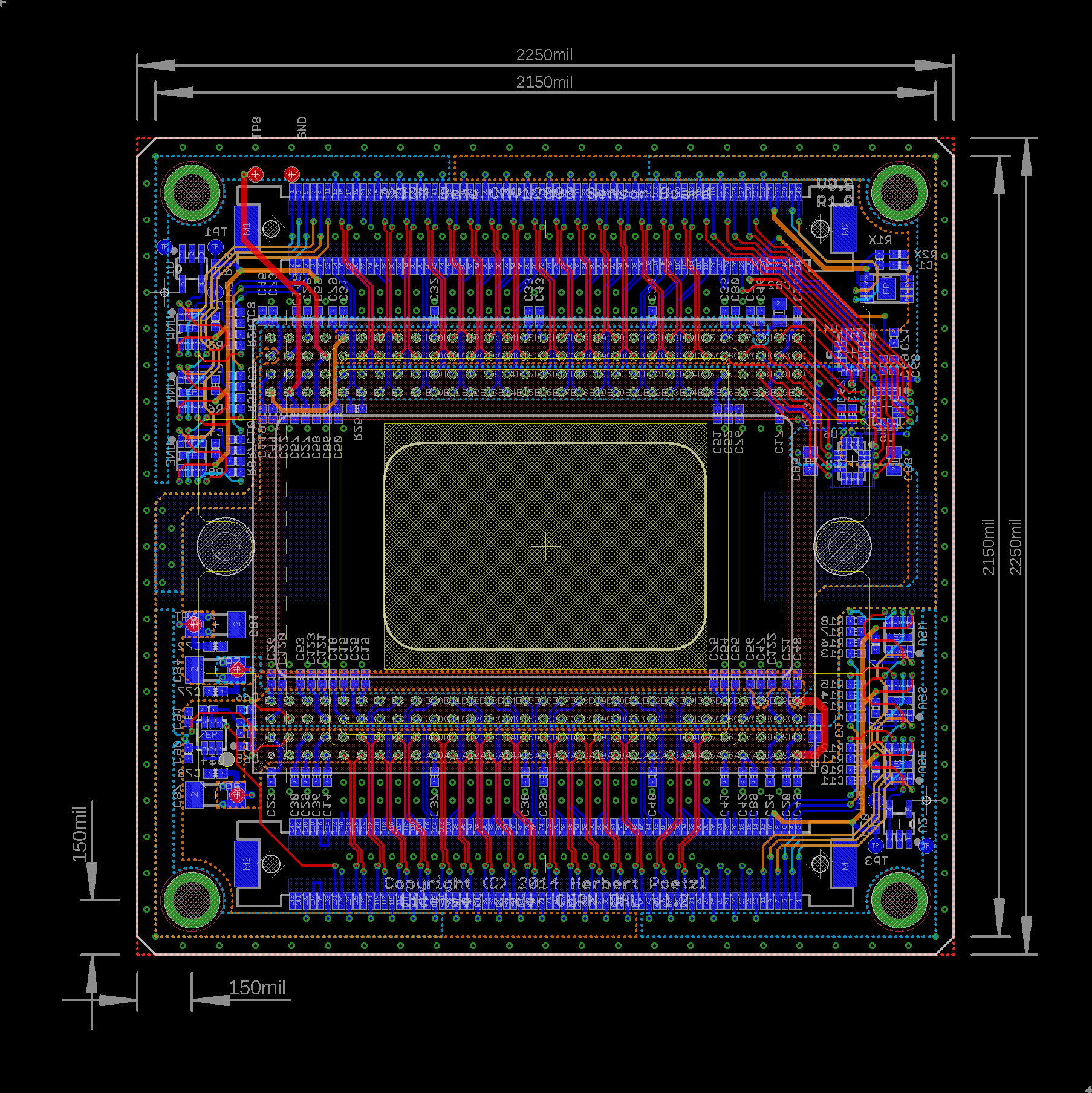
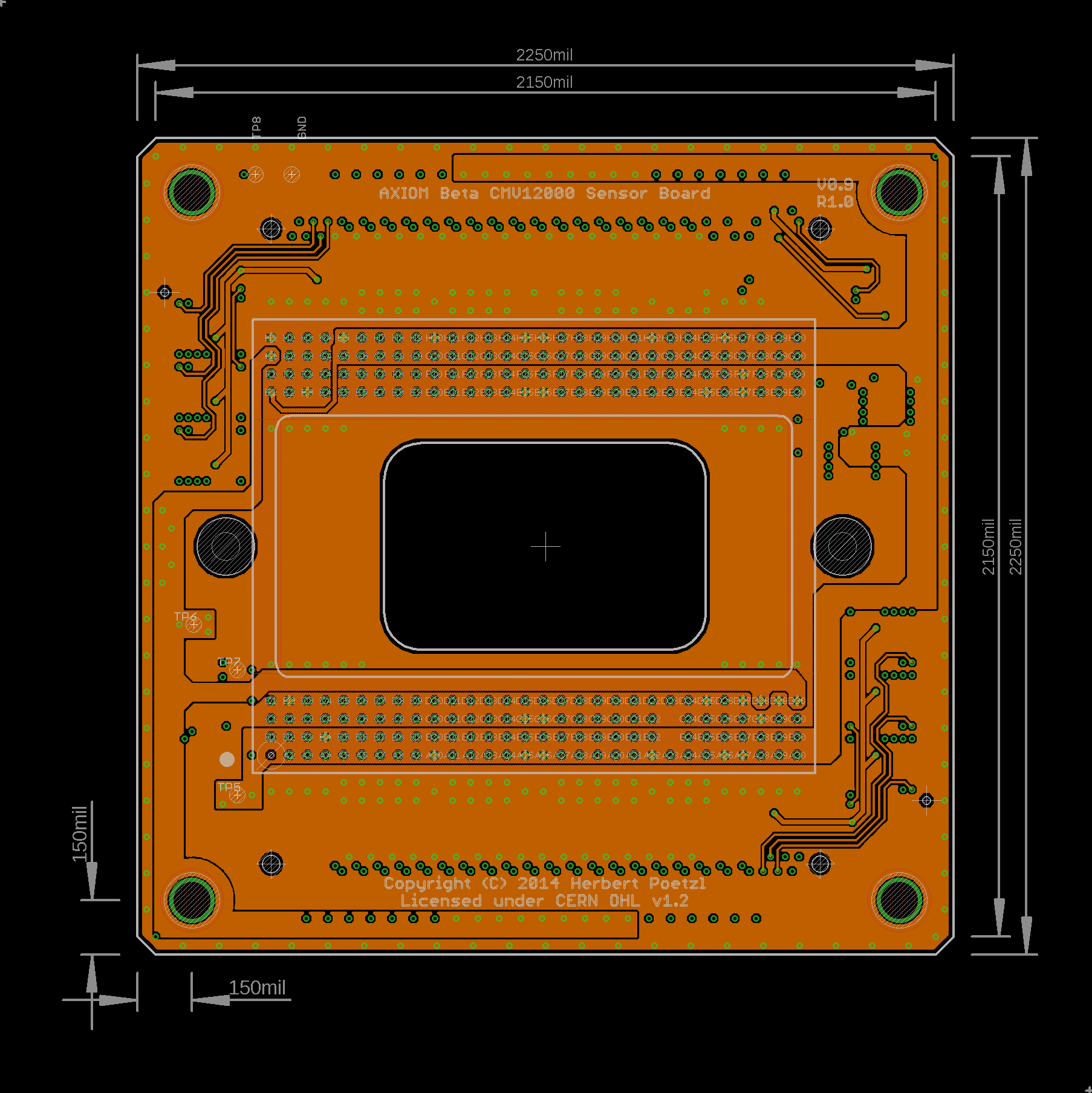
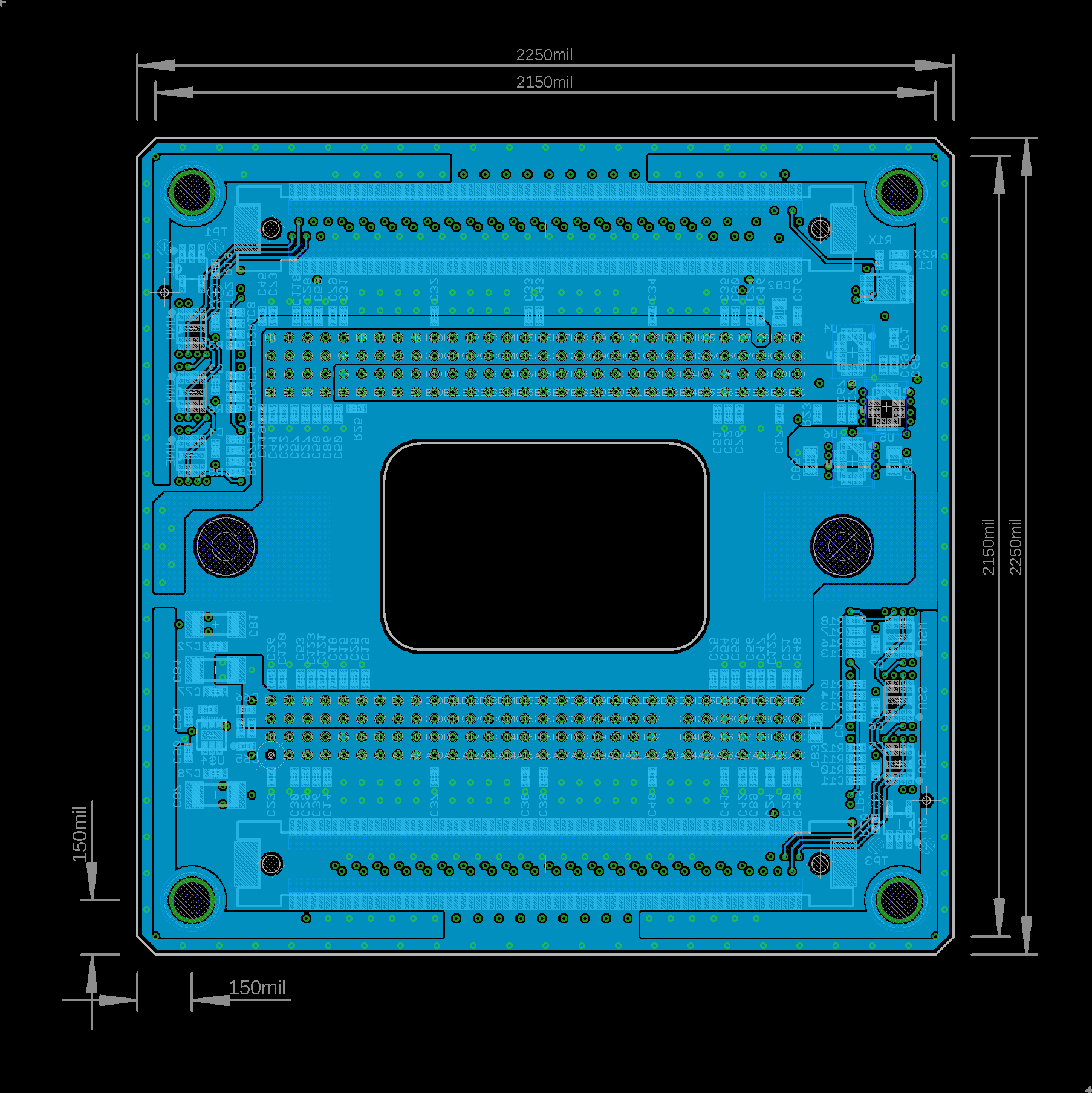
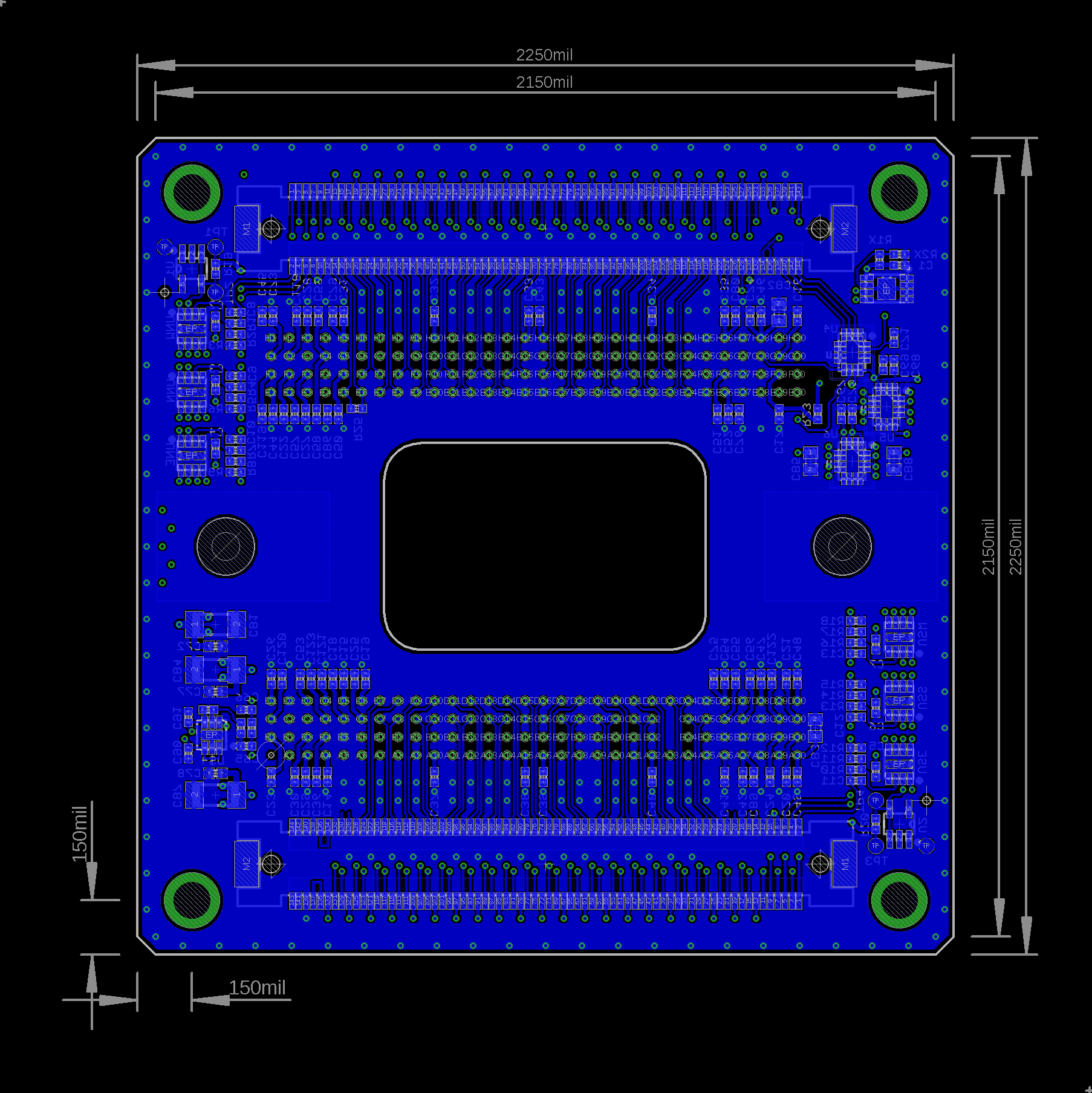
First Image Sensor Module PCB design draft finished


We've just finished the schematic and layout for the AXIOM Beta 4K Super35 (CMV12000) image sensor board. Yay!


The design features a few new ideas we gathered during the crowdfunding campaign from input and feedback to the existing design.


Those are as follows:


The sensor board contains an EEPROM to store sensor model, voltages and unique identifiers.


The sensor board can be rotated by 180 degree and still work with the same interface board (auto discovery to detect orientation).


The sensor board specifies and verifies what sensor voltages are desired and required (up to six voltages can be requested).


There are no parts on the top of the PCB except for the sensor/sensor socket to facilitate any kind of cooling system.


There is a cut-out area in the middle to connect to a heat sink or to measure sensor temperature with a thermopile.


Besides that, the designed interface should be generic enough to accommodate a number of other sensors without any changes to the interface board connections. This is an important step in AXIOM Beta design towards the modularity we are aiming for with the AXIOM Gamma. If you are experienced with schematics and/or board layout, please take the time to review the design and notify us about any issues you find. Note that this is a preliminary design and needs to be verified before we can actually build it.


Schematic:

Layer images:

Eagle files:


Perk Fulfillment Team


Our perk fulfilment team has been extra busy to contact all backers about their preferred button design choice, their t-shirt sizes or to notify backers who did not add the shipping cost to their pledges so far. The buttons are already in production and should arrive in our office soon.

AXIOM Beta Remote Controller Menu Simulator


We started creating an online simulation of the remote controller menu structure so we can evaluate the best way how these devices can be operated intuitively. The simulator is still an early draft but the basic foundation is now done and future extensions can be added easily.


If you want to help us feel free to grab the source code and make changes (send us a pull request when done): https://github.com/apertus-open-source-cinema/dictator/tree/master/HTML-Simulator


AXIOM Remote Control Device is looking for a name


In 2011 when we first announced the project to build a remote control device for the Elphel camera at that time we called it “Dictator”. We referred to the “benevolent dictator” like Linus Torvalds who is typically the initial leader of an open source community project but we did acknowledge that most people had other interpretations of much less popular persons of interest in history. We are still looking for a name, make suggestions here: http://lab.apertus.org/V3


UK Rental House Rogue Element To Rent AXIOM Beta Cameras 


While the concept of “open source” may seem arcane to many, it is in fact a profound intellectual and moral breath of fresh air – and has very specific implications for digital filmmakers. In the world of cinematography and photography, its champions are Magic Lantern (software), Apertus (hardware) and now Rogue Element (commerce), all working together.

Frankly, I’m surprised by my own excitement over a press release, but there you have it: a UK rental house has just announced that it is embracing open source (in addition to its regular business model), and I want them to be successful.

You should, too.

If you’re a regular planet5D reader, you know that – like many of you – we’re big fans of Magic Lantern, the open source hack for Canon DSLRs (and even a mirrorless or two) which unlocks tremendous functionality such as RAW, wide dynamic range and much, much more.

Even Canon uses Magic Lantern.

More recently, you may have read our coverage of the open source AXIOM camera by Apertus and its crowd-funding campaign here, here and here,where we were delighted to learn that Magic Lantern and Apertus were joining forces with the same ethos of transparency, community and competence.

With Rogue Element’s announcement of its support for the AXIOM as well (they will be renting the beta cameras at a price of zero — you read that right), we now have the basis for an open source digital video ecosystem.

Why is this important and why should you care?

If you’ve ever been frustrated by manufacturers who cripple the functionality of their lower priced equipment in order to encourage customers to move to much more expensive gear, open source is perhaps the best antidote: competition based on that same transparency, community and competence — with concomitantly lower price points (although credit where credit is due: Panasonic’s GH4 and the broader mirror-less revolution have shaken up the DSLR giants).

Proprietary guys want to charge a lot of money for their gear? Totally fine, as long as you actually get what you pay for. One need look no further than Apple and Google in the ongoing phone wars to see a wonderful example of how “open” (Android) spurs the best effort from proprietary (Apple). No flame wars, please: both camps have their adherents, and to each his own.

But it’s when proprietary guys charge more by obfuscating what they’re actually doing that most of us get upset. It’s less about capitalism than rigging the game.

I’m not mentioning any names, but you know who they are.

On the other hand, too much innovation is simply exhausting and diverting, and more profits means more jobs for more people (unless it all flows to the top 1%, but that’s beyond the scope of this post). So we’re not against capitalism nor are we against proprietary gear.

But in the same way that journalism – when it functions well – works as the “fourth estate” and is a balance on the three branches of government here in the U.S. and elsewhere, open source can do the same in the world of things. It’s not for everyone, but it plays an invaluable role.

Oligopolies ultimately are most helpful to the oligarchs who run them, and in era of dramatically increasing inequality, gluttony and greed, that’s not OK.

To Apertus, Magic Lantern and now Rogue Element, we say: “good on ya.” We will be following your progress closely.

Rogue Element Embraces an Open Source Philosophy

Thursday, 23 October 2014

Apertus Axiom Alpha Footage : Vimeo Link


http://vimeo.com/groups/274679/videos/107801527

I had the opportunity to play in post with some footage provided by the Apertus team. The footage was shot by the Apertus team with an early Axiom prototype.

I was really impressed with the footage and with what the Apertus team has achieved so far. There is some FPN in some shots ( in the Beta there are already plans how to eliminate it entirely). I am more than excited to see what the Apertus team is preparing for the following months. The fact that they also teamed up with the Magic Lantern team, makes things even more exciting.

indiegogo.com/projects/axiom-beta-the-first-open-digital-cinema-camera/x/8764138#activity

I think that for the first time, filmmakers will have the opportunity to choose the specs they actually want or need.